
Aug 18, 2026
Why Use Galvanized Union 330 Fittings in Threaded Piping Systems?
Galvanized union 330 pipe fittings serve as critical components in threaded piping systems, delivering secure connections paired with excellent corrosion protection. These fittings allow for easy disassembly during maintenance activities without requiring cuts to fixed pipework or rotation of connected sections. The hot-dipped galvanized coating, combined with precision-threaded design, ensures long-term reliability in industrial water, gas, and HVAC applications. Understanding why these fittings outperform alternatives helps procurement managers and engineers make informed decisions that reduce lifecycle costs while maintaining system integrity under demanding operational conditions.
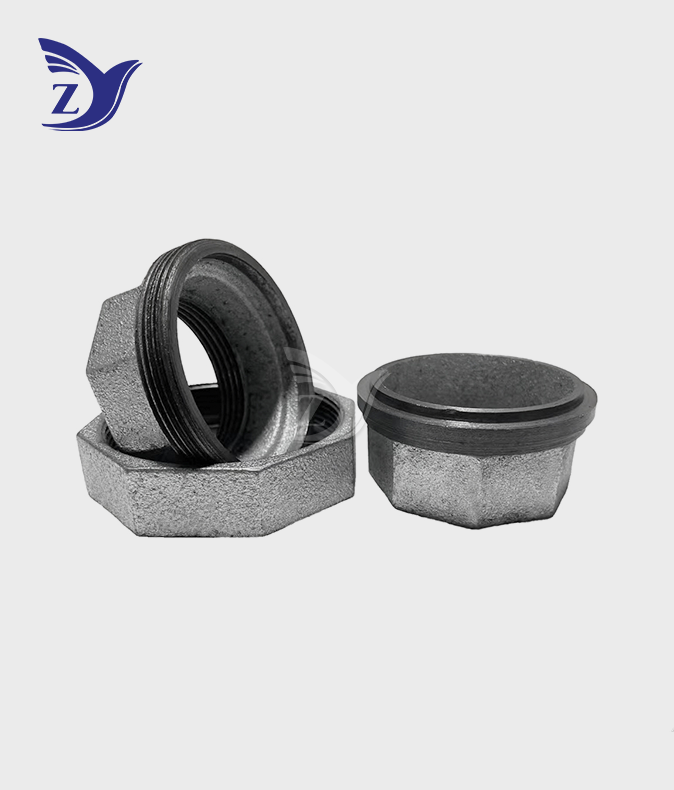
Understanding Galvanized Union 330 Pipe Fittings
What Makes the 330 Design Distinctive
The number 330 refers to a flat seat union design. Two threaded pipe sections join through a three-piece assembly, which includes two end pieces with internal threads that attach to pipes and a union nut that pulls the surfaces that fit together together. In contrast to the 340 conical seat design, which uses tapered metal-to-metal contact, the 330 flat seat design places a gasket between two machined surfaces that are parallel to each other. This basic difference affects how well it seals, how to maintain it, and what kinds of uses it can be used for.
At our factory in Taigu District, we use Black Heart Malleable Iron that meets ASTM A197 standards to make these unions. Our natural gas-fired kilns use a special annealing process on this material to turn brittle white iron into parts that are flexible and resistant to shock. The structure can be shaped, so it can handle the pressures of thread engagement and thermal growth cycles that would break most cast iron fittings.
Galvanization Process and Protective Benefits
Immersion of the malleable iron base in liquid zinc at about 450°C for hot-dip galvanization adds a zinc coating. Our environmentally controlled galvanizing furnaces make sure that the coating thickness is higher than what is required by ASTM A153. Usually, we get a total zinc weight of 600–700 g/m². This is equal to about 85 to 100 microns of a protective layer that acts as both a barrier and stops cathodic corrosion.
When the zinc coating comes in contact with moisture in the air, it forms a stable patina that can fix small scratches on its own. When zinc comes into contact with water or soil, it breaks down first, protecting the iron below from oxidation. This electrochemical protection makes fittings last a lot longer than painted or unpainted options, which lowers the number of times they need to be replaced and the work costs that come with that in hard-to-reach places.
Thread Standards and Compatibility
Depending on the needs of the final market, our galvanized union 330 pipe fittings come with either NPT (National Pipe Taper) threads that meet ASME B1.20.1 standards or BSPT (British Standard Pipe Taper) threads that meet ISO 7-1 standards. When NPT is put together correctly with thread sealant or PTFE tape, the 60-degree thread angle and 1:16 taper ratio make interference fits that improve sealing. BSPT threads use a 55-degree angle and have a similar taper, but their pitch sizes are different.
With both thread standards, you can choose from sizes 1/4 inch to 6 inches. As part of our quality control process, we use a Go/No-Go gauge to make sure that each size stays within certain dimensional limits. This makes sure that it works with pipes and fittings made by other companies and stops cross-threading problems that lead to leaks and early failure.
Benefits of Using Galvanized Union 330 Fittings in Threaded Systems
Superior Corrosion Resistance in Real-World Environments
Industrial pipe systems are exposed to chemicals, water, and airborne particles that speed up the deterioration of metal. This problem is solved by galvanized union 330 pipe fittings, which have a layer of zinc that acts as a sacrifice and corrodes at a steady rate under normal conditions. Testing information from municipal water systems shows that galvanized fittings will keep their structural integrity for 40 to 50 years when used with potable water. This is a lot longer than black iron alternatives, which rust through in 15 to 20 years.
In farm irrigation systems where the pipes are outside and get wet and dry at different times of the year, the galvanized coating stops the rust-jacking that stops threaded connections from locking. Maintenance teams at farming operations say that galvanized union 330 pipe fittings can be removed to service valves and change filters, even after years of being out in the field, while bare fittings usually need to be cut and replaced.
Installation Efficiency and Maintenance Access
Because union fittings are removable, pipes don't have to be rotated when they are being put together or taken apart. This is very important in small mechanical rooms or when linking to fixed equipment like pumps and heat exchanges. Installation crews can make connections faster because they can pre-assemble pipe sections with one union half, place the assembly, then connect the mating half and tighten the union nut. This way, they don't have to turn long pipe runs, which could damage nearby equipment or structural elements.
Maintenance screens are also helpful in this way. When techs need to repair or service a system part, they simply loosen the union nut, separate the flat seat interface, and get to the part right away, without having to drain large networks of pipes or cut and re-thread pipes. This feature cuts down on downtime costs by a large amount in business HVAC systems and industrial process lines where production stops cost a lot of money.
Economic Value Across Product Lifecycle
The economic benefit of galvanized malleable unions is shown when comparing the total cost of ownership instead of just the initial purchase price. Black iron unions cost 15-20% less at first, but they need to be protected with a coating during installation and painted again every so often to keep corrosion from happening. The ongoing costs of labor and materials for this upkeep, along with the need for replacements more often, make the total costs much higher than galvanized options.
Stainless steel unions are better at resisting corrosion than galvanized fittings, but they usually cost three to four times as much. This extra cost makes sense for chemical uses that are very corrosive or for marine settings, but for most business and light industrial systems, galvanized protection is enough. The cost-to-performance ratio of galvanized union 330 pipe fittings makes the best use of budgets for the numbers of parts that are needed for big building projects.
Another way to compare is with brass unions, which have middling corrosion protection but cost twice as much as galvanized iron and have lower pressure values and impact strength. Procurement managers like galvanized malleable unions because they are strong like ferrous materials and protect against corrosion almost as well as brass. The price is also low enough that it makes sense for large projects.
Comparing Galvanized Union 330 to Other Pipe Fittings Solutions
Galvanized vs. Stainless Steel Unions
Stainless steel unions are made of chromium and nickel alloys that stop corrosion by creating a passive oxide film instead of a coating that wears away. Because of this, they are perfect for working with chemicals that are corrosive, being in saltwater, or using high-purity pharmaceuticals where zinc contamination is not acceptable. However, because stainless steel is more expensive and needs to be machined more, these unions are only economically viable in places where galvanized coatings aren't enough.
Different things affect strength in different ways. Unions made of malleable iron can handle higher impact loads and sudden changes in pressure without cracking, but unions made of stainless steel are stronger when pulled apart. The decision you make will depend on whether your system is subject to shock loads from water hammer or steady-state pressure conditions. For general city, HVAC, and fire protection systems where rust control is more important than resistance to unusual chemicals, we suggest galvanized union 330 pipe fittings.
Black Iron vs. Galvanized Alternatives
Black iron fittings are cheaper to buy at first and work well in dry, indoor places where corrosion is slower to happen. In industrial buildings, black iron is often used for gas distribution systems because combustion fumes don't contain much water. Since there is no galvanized covering, there is no need to worry about zinc falling into gas lines or messing up equipment further downstream.
Galvanized protection is necessary for water service, fire protection systems, and any other use that will be exposed to water. The coating stops the rust from forming, which pollutes water supplies, clogs strainers, and causes valves to fail before they should. Building codes in many places require galvanized or corrosion-resistant materials for fire sprinkler and potable water pipes. This means that black iron isn't an option, even if it's cheaper.
Union 330 vs. Union 340 Design Choices
Choosing between flat seat (330) and conical seat (340) union styles affects more than just the material you choose. It also affects how you maintain the seal and how well it works. The 340 design makes metal-to-metal contact along a tapered cone, which gets rid of the need for gaskets but needs precise machining and the right amount of torque to tighten. Small errors in alignment or damage to the surface can weaken the seal, and you need special honing tools to work on the cylindrical surfaces again.
The 330 flat seat design can handle a small amount of displacement because the gasket is compressed, and it's easy to replace the gasket during upkeep to make the seal work again. In situations where fittings need to be taken apart often for maintenance, this is helpful. It is cheaper for industrial facilities to keep gaskets on hand than to fix leaky conical unions that need to have their surfaces refinished or replaced after being handled roughly.
How to Procure Quality Galvanized Union 330 Pipe Fittings?
Manufacturer Evaluation Criteria
Checking the suppliers' quality management systems and industry certifications is the first step in finding reliable ones. ISO 9001-certified factories have written procedures for getting materials, keeping track of production, and doing the final inspection. Our factory in Shanxi Province follows these rules by using unified processes that keep track of each production batch from the time raw materials are received until finished goods are shipped.
When projects need a lot of things and need them quickly, production ability is important. Our 30,000-ton annual capacity, which is supported by 8 medium-frequency electric furnaces and 156 machining stations, lets us handle big orders without having to add extra lead times that cause construction schedules to slip. Smaller makers may have competitive prices, but they don't have the extra equipment to keep their shipping promises when equipment breaks down or demand goes up.
The ability to provide technical support is what sets quality suppliers apart from commodity vendors. When engineers choose parts for complicated systems, they need to be able to access information about sizes, pressures, and compatibility. Our 38 technical specialists help customers with applications by matching fitting specs to their system needs and fixing installation problems that come up during the project's execution.
Quality Verification and Testing Standards
When it comes to leak-free assembly, thread accuracy is the most important factor. We use accurate Go/No-Go gauges that meet the standards set by ASME B1.20.1 and check all threaded parts before they are galvanized. This stops the thread from warping, which can let sealer slip through or cause galling during fitting. Random sampling is checked by a coordinate measuring machine to make sure that the accuracy of the gauges stays within the limits.
For galvanization thickness testing, magnetic gauges are used to make sure that the coating weight meets the minimums set by ASTM A153 across the whole fitting surface. This includes recessed areas that may only have thin coverage in dip tanks that aren't well controlled. There is a way to find out what happened if there are problems in the field because we write down measurements of the coating thickness in production records that go with shipments.
Hydrostatic pressure testing makes sure that the structure is strong and that it can shut properly in real-world situations. Fitting samples from every production run are tested at 1.5 times their estimated working pressure, and trained testers watch for leaks, deformation, or failure. This destructive testing makes sure that differences in making haven't changed safety features that were put into the design.
Procurement Logistics and Supply Chain Management
When you buy from makers abroad, lead time planning takes into account things like production schedules, galvanizing processes, and foreign shipping. For Chinese customers in mainland China, standard NPT union fittings in popular sizes (1/2" to 2") usually ship from our stock within 48 hours. International orders take longer because of the paperwork needed for export, the loading of containers, and the trip across the ocean. It usually takes 4-6 weeks from the time the order is confirmed until it arrives at its destination port.
The minimum order quantity changes based on the thread standard and fitting size. For high-volume sizes like 3/4" and 1" NPT unions, you can ship as few as 500 pieces. However, for specialized sizes or BSPT setups, you might need to ship at least 1,000 to 2,000 pieces to justify setting up production. We work with distributors and big contractors to combine orders of different sizes so that containers are used most efficiently and project needs are met.
Standards for packaging protect metal surfaces while they are being handled and stored. Our double-layer cardboard boxes with interior dividers keep fittings from touching each other, which could damage the coating. Containers can be stacked easily on pallets that are covered in shrink wrap to keep them dry during ocean transport. This attention to logistics details lowers the number of rejections that happen, which can throw off installation plans when broken materials show up.
Conclusion
Galvanized union 330 pipe fittings offer clear benefits in threaded plumbing systems by protecting against corrosion, making upkeep easier, and saving money. The flat seat design makes it easy to take things apart for maintenance, but it also makes it easy to replace the gaskets, so the sealing stays reliable. Hot-dip galvanization greatly increases the useful life compared to uncoated options in wet environments, lowering lifetime costs by cutting the need for replacements and upkeep. When buying these tools, paying attention to the manufacturer's quality systems, making sure the tests are done correctly, and planning the processes will make sure that projects get parts that work as planned in tough industrial, municipal, and commercial settings.
FAQ
What distinguishes galvanized union 330 fittings from union 340 models?
The main difference is in how the seals are made. Galvanized union 330 pipe fittings have a flat seat design, which means that two parallel polished surfaces press down on a gasket to make a seal that is pressure-tight. This setup makes upkeep easier because you don't need any special tools to replace an old gasket and get the sealing ability back. Union 340 fittings have a conical taper seat that makes metal-to-metal contact. This means that they don't need a gasket, but they need to be precisely machined and lined up. The 330 form works better in situations where parts are taken apart and put back together more often or are handled roughly.
How does galvanized coating thickness affect fitting longevity?
The thickness of the coating is directly related to how long it protects against rust. ASTM A153 says that pipe fittings must have zinc weights of at least 610 g/m², which is about 85 microns thick on average. When the coating weight is higher, it takes longer for zinc to be used up, which lets the iron underneath it rust. Our manufacturing process aims for 650–700 g/m² to provide a safety margin above code minimums. This gives our products 40–50 years of service in municipal water applications, compared to 25–30 years for alternatives with less coating.
Can galvanized unions be used in potable water systems?
Yes, galvanized union 330 pipe fittings are safe for contact with potable water as long as they are made and installed correctly. When the pH level is normal, the galvanized coating doesn't let any dangerous metals into the drinking water. Many building rules require that the pipes that carry water inside must be galvanized or made of materials that are just as resistant to rust. We suggest checking the local building codes and asking the manufacturer for proof that the product meets NSF standards for use with potable water.
Partner with Zhiyuan Malleable Steel for Reliable Union 330 Fittings
Every galvanized union 330 pipe fitting that Zhiyuan Malleable Steel makes at our Taigu District factory comes with 26 years of specialized production know-how. Our yearly capacity of 30,000 tons, along with our ISO 9001 quality systems and thorough testing methods, makes sure that purchasing managers get parts that are properly certified and come on time. As a top company that makes galvanized union 330 pipe fittings for fire protection contractors, municipal utilities, and industrial plant operators around the world, we keep a large stock of standard NPT and BSPT sizes ready for quick delivery, and we also offer ODM/OEM customization for unique needs.
You can email our expert team at q1236800000@gmail.com to talk about project details, get full product data sheets, or get quotes from other companies for a future purchase. We replace broken products without asking for permission and give you the paperwork you need to prove that they follow the rules. Visit zymalleablepipefitting.com to see our full catalog of fittings and learn how working with a well-known supplier can streamline your supply chain and give you the quality guarantee that your image requires.
References
American Society of Mechanical Engineers. (2020). Pipe Threads, General Purpose (Inch), ASME B1.20.1. New York: ASME Press.
ASTM International. (2019). Standard Specification for Zinc Coating (Hot-Dip) on Iron and Steel Hardware, ASTM A153/A153M-16a. West Conshohocken: ASTM International.
ASTM International. (2018). Standard Specification for Cupola Malleable Iron, ASTM A197-19. West Conshohocken: ASTM International.
British Standards Institution. (2015). Pipe Threads Where Pressure-Tight Joints Are Made on the Threads – Part 1: Dimensions, Tolerances and Designation, ISO 7-1:1994. London: BSI Standards.
National Fire Protection Association. (2022). Standard for the Installation of Sprinkler Systems, NFPA 13-2022 Edition. Quincy: NFPA.
NSF International. (2021). Drinking Water System Components – Health Effects, NSF/ANSI 61-2021. Ann Arbor: NSF International.
Online Message