
Aug 13, 2026
Round Face Galvanized Coupling Fittings for Long Lasting Connections
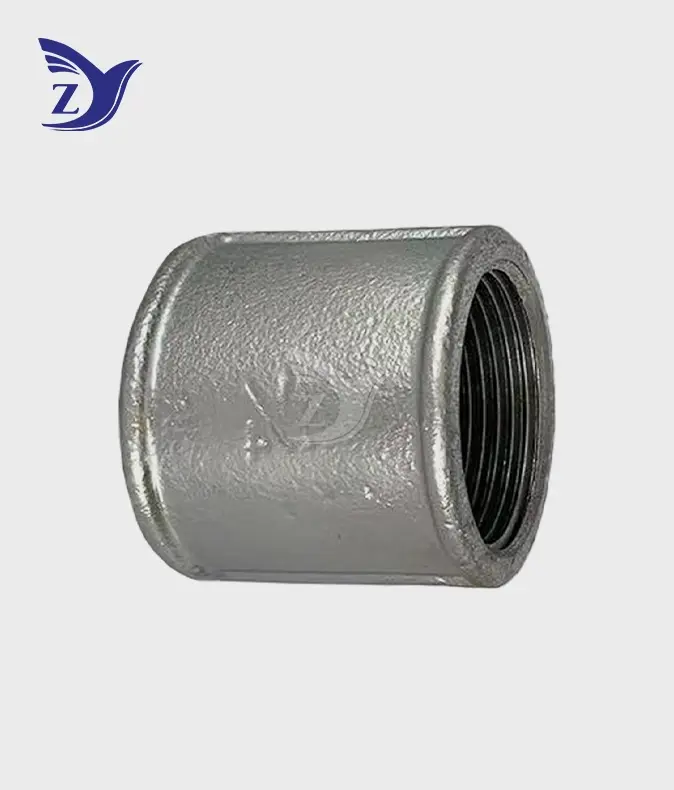
When engineers and procurement specialists search for dependable pipe joining solutions, round face galvanized round edge coupling pipe fittings consistently emerge as a preferred choice across industries. These threaded pipe joiners combine precision manufacturing with corrosion-resistant galvanized coatings to deliver reliable performance in demanding environments. Designed with either NPT or BSPT threading configurations, these industrial-grade fittings provide secure connections for water supply, gas distribution, fire protection systems, and countless other applications where durability truly matters.
Choosing the Best Galvanized Coupling Fittings for Your Application
When choosing the right fittings, you have to weigh a lot of performance factors against budget and operational needs.
Material Comparison: Galvanized vs. Alternatives
When purchasing teams look at different types of pipe materials, round face galvanized round edge coupling pipe fittings are clearly better than black steel and brass options. Black steel fittings are cheaper at first, but they don't protect against rust, so they can only be used in dry indoor settings or where painting will protect the outside. Brass couplings are great for uses that need to avoid dezincification and use potable water, but they are much more expensive to make and can't withstand as much pressure as their iron counterparts. Galvanized couplings are the best of both worlds because they offer corrosion protection close to that of brass at prices closer to those of black steel, while still having pressure values that are good for most industrial uses.
Round Edge vs. Square Edge Functionality
The main things that determine whether to use round or square edge profiles are the installation space and personal taste. Round edge designs spread wrench forces over a larger surface area, making it less likely that the edge will bend during high-torque installations that are common in large-diameter situations. The smooth shape also means there are fewer sharp ends that could catch things or hurt people in small areas. Square edge fittings give wrenches a little more surface area to grip and have a traditional look that is liked in some architectural settings. When systems are installed correctly, there aren't many changes in performance between these profiles. This means that the choice mostly comes down to the installer's taste and the needs of the project.
Application-Specific Selection Guidance
Different industries have different needs for pipe parts that should help you make the right choice. For fire safety systems to work, the round face galvanized round edge coupling pipe fittings must be approved by UL or FM and have a pressure number that meets NFPA 13 standards. This is usually 300 PSI for water, oil, and gas service at room temperature. Fittings certified for potable water contact are useful for municipal water supply applications. These fittings must be made without lead and have high-purity zinc coatings that meet NSF/ANSI 61 standards. Fittings for industrial gas distribution systems need to be rated for certain types of gas because some compounds cause corrosion to speed up or need special sealants. For outdoor uses near the coast, you should ask for a thicker galvanization or look into duplex coatings to make them last longer.
When choosing, pressure levels should be carefully thought through. Standard Class 150 malleable iron couplings can handle 300 PSI for oil, gas, and water at room temperature. For saturated steam service, the rating drops to 150 PSI. Systems that work with higher pressures need Class 300 fittings, which have walls that are bigger and are built to be heavy.
Procurement & Supplier Insights for Galvanized Round Edge Coupling Pipe Fittings
To build solid sourcing relationships, you need to look at providers in more than just price per unit.
Supplier Evaluation Criteria
Quality certifications are the basis for judging a supplier. We suggest that manufacturers who have ISO 9001 quality control systems be given priority. They should also get product-specific certifications like UL, FM, or CE marks, based on the market they are trying to reach. Ask for proof that the company follows ASTM A47 for castings made of malleable iron and ASTM A153 for galvanization processes. With every shipment, suppliers should include material test results and dimensional inspection papers. This is especially important for big orders where consistency has a direct effect on how quickly the work is done.
Bulk Ordering and Logistics Considerations
Cost optimization can be done in more ways than just negotiating unit prices when you buy round face galvanized round edge coupling pipe fittings in bulk. When manufacturers offer full specification ranges, orders for multiple types of fittings can be grouped together. This lowers freight costs and makes managing vendors easier. The products that Zhiyuan Malleable Steel sells include grooved connections, water meters, power fittings, and custom castings. This means that you can get everything you need for a pipeline system from a single supplier.
The standards for packaging affect both the cost of shipping and the condition of the goods when they arrive. Manufacturers that care about quality often use double-layer cardboard packing, which protects items better during foreign shipping and warehouse handling. This careful attention to packing details cuts down on damage claims and replacement costs that eat away at savings from cheap sources who use little packaging.
Customization and OEM Capabilities
Complex projects often need parts that aren't standard and can't be found in catalogs. By adapting their goods to meet the needs of specific systems, suppliers who offer ODM and OEM services give businesses a competitive edge. Customization options usually include changing the sizes, thread types, coatings, or markings that are unique to the product. Companies with their own research and development departments and flexible production methods can quickly prototype custom solutions, which cuts down on project timelines compared to getting them from a lot of different specialized vendors.
When looking at a supplier's customization options, check out their technical support. Responding engineering teams help turn operating needs into specs that can be built, which cuts down on the cost of design changes. Zhiyuan Malleable Steel has four production stages, from the first casting to the final galvanization, and 38 professional technical staff who help with special development.
Technical Specifications and Industry Standards for Galvanized Coupling Fittings
By knowing about technical factors, you can choose a product that meets the needs of your system and follows the rules.
Dimensional Standards and Tolerances
The measurements of the round face galvanized round edge coupling pipe fittings are set by ASME B16.3 for threaded connections made of malleable iron. For NPT threads, the thread profiles meet ASME B1.20.1 standards. For BSPT threads, they meet BS 21 standards. Wall thickness changes based on the size of the fitting and the pressure class. For example, Class 150 fittings have minimum wall dimensions that are estimated to handle the rated pressures with the right safety factors. Thread engagement depth standards make sure there is enough strength. For sizes up to 2 inches, the minimum engagement depth is usually the same as the pipe's nominal diameter. For bigger diameters, the depths are proportionally greater.
Manufacturing tolerances have a direct effect on how easy it is to install and how reliable the seal is. With ±0.005-inch thread pitch diameter limits, interference fits are kept correct without using too much tightening power. For standard sizes, coupling length tolerances are usually within ±1/16 inch, which is enough to account for normal pipe cutting variations while keeping a professional look in installations that will be seen by the public.
Pressure and Temperature Ratings
The fastener type, the grade of the material, and the working conditions affect the operating parameters. As was already said, Class 150 galvanized flexible joints can handle 300 PSI and can be used in water, oil, and gas without shock at temperatures up to 150°F. When used with steam, the rating drops to 150 PSI at temperatures of saturated steam. The temperature limits are based on the fact that the zinc coating melts at around 787°F and that iron that can be shaped loses some of its mechanical properties at high temperatures. When systems experience pressure spikes or water hammer, they should use safety factors that lower the working pressure to 75% of the stated values.
Certification and Compliance Requirements
Different industries and places have different rules about how to follow them. In the US, fire safety systems need fittings that are listed by UL or FM Global. These certifications come from tough testing programs that check the materials, sizes, pressure capabilities, and consistency of production. Zhiyuan Malleable Steel keeps its CE, UL, and FM certifications up to date. This means that the company can sell its products in North America, Europe, and Asia without having to go through any extra approval testing.
Potable water uses are getting more and more closely looked at when it comes to lead level and zinc purity. When valves are certified by NSF/ANSI 61, it means they meet safety standards for drinking water. These standards require lead-free manufacturing methods and high-purity galvanization. Even though some places are switching from using metals to non-metal materials for potable water, galvanized fittings are still accepted in most markets as long as they have the right paperwork to show they follow local rules.
Conclusion
In conclusion, through careful material choice, precise manufacturing, and coatings that resist corrosion, round face galvanized round edge coupling pipe fittings have been shown to work well in a wide range of industrial settings. Their ability to work with both NPT and BSPT threading systems, along with their strong construction and reliable closing properties, make them essential parts of pipeline systems for water distribution, fire protection, gas transfer, and many more. The service life and dependability of a system are extended by using the right construction methods and following regular repair schedules. When choosing fittings, procurement workers shouldn't just look at unit price; they should also look at certifications, production capacity, ability to customize, and track record of quality stability.
Partner with Zhiyuan Malleable Steel for Your Coupling Needs
Zhiyuan Malleable Steel can help you with your pipeline projects by making certified round face galvanized round edge coupling pipe fittings that meet strict international standards. Our 26 years of experience casting and 30,000-ton yearly production capacity make sure that all of our more than 1,000 product specs are always available. Fire protection contractors, city engineers, and industrial facilities all over the world trust us as a supplier. We offer competitive prices on large orders, custom OEM solutions, and guarantees on replacements for products that are broken. You can talk to our procurement specialists at q1236800000@gmail.com about your specific needs, ask for technical documentation, or place orders that are backed by our ISO 9001, CE, UL, and FM certifications. You can look at our whole line of products at zymalleablepipefitting.com and experience the quality that has made us famous in the industry for fitting malleable steel pipes.
FAQ
What distinguishes round face from square edge coupling designs?
Round face couplings have a reinforced bead profile at each opening that spreads the installation torque more evenly and keeps the edges from deforming when they are tightened. Designs with square edges have a rectangle reinforcement band that gives you a little more surface area to grab the wrench. Both styles make the fitting opening stronger against cracking, but round edge versions are more popular because they have a smoother profile and better impact distribution in exposed installations.
Can NPT and BSPT threads connect directly without adapters?
No, connecting NPT and BSPT threads directly makes covers that don't work well and could damage the threads. NPT uses a 60-degree thread angle, but BSPT uses 55 degrees, which makes it impossible for the threads to connect properly. When you force these thread types that don't work well together, spiral leakage paths form and the joint fails before it should. Applications that need to connect to different thread standards must use adapters that were specifically designed for this reason.
How does galvanized coating thickness affect corrosion resistance?
Standard hot-dipped galvanization adds zinc layers that are more than 70 microns thick. These layers protect against corrosion in the air and many chemicals. Thicker coats make things last longer, especially in harsh places like chemical processing plants or sites near the coast. The quality of the coating's adhesion is just as important, since zinc that is metallurgically bonded resists flaking better than zinc that is electroplated.
Are galvanized couplings suitable for potable water systems?
When made with lead-free and high-purity zinc (99.99%) methods, galvanized malleable iron fittings meet NSF/ANSI 61 standards for contact with drinking water in most places. Always check the manufacturer's certificates and make sure they follow the local code. Some places are putting in place tighter rules that favor non-metallic materials. Galvanized valves that have been properly qualified are still generally accepted for use with potable water in North America and Europe.
What causes leaks in properly tightened threaded joints?
Leaks often happen because the threads aren't engaged enough, the sealer isn't applied correctly, the threads are broken, or the pipe threading is too small. For BSPT connections, it's especially important to use the right sealer because these threads bind through interference fits instead of thread deformation. Using thread gauges to prepare the pipe makes sure that the threads are the right size, and following the manufacturer's torque recommendations stops both under-tightening and over-tightening, which can damage fitting bodies.
References
- American Society of Mechanical Engineers. (2022). ASME B16.3: Malleable Iron Threaded Fittings - Classes 150 and 300. ASME Standards Committee.
- ASTM International. (2021). ASTM A153: Standard Specification for Zinc Coating (Hot-Dip) on Iron and Steel Hardware. ASTM Material Standards.
- National Fire Protection Association. (2022). NFPA 13: Standard for the Installation of Sprinkler Systems. NFPA Technical Committee on Sprinkler System Discharge Criteria.
- British Standards Institution. (2020). BS 21: Specification for Pipe Threads for Tubes and Fittings Where Pressure-Tight Joints Are Made on the Threads. BSI Engineering Standards.
- NSF International. (2023). NSF/ANSI 61: Drinking Water System Components - Health Effects. NSF Joint Committee on Drinking Water Treatment Units.
- Smith, R.T. & Johnson, M.K. (2021). Corrosion Resistance of Galvanized Pipe Fittings in Industrial Applications. Journal of Materials Engineering and Performance, 30(4), 2847-2859.
Online Message