
Sep 18, 2026
NPT Coupling vs Union: What Is the Difference?
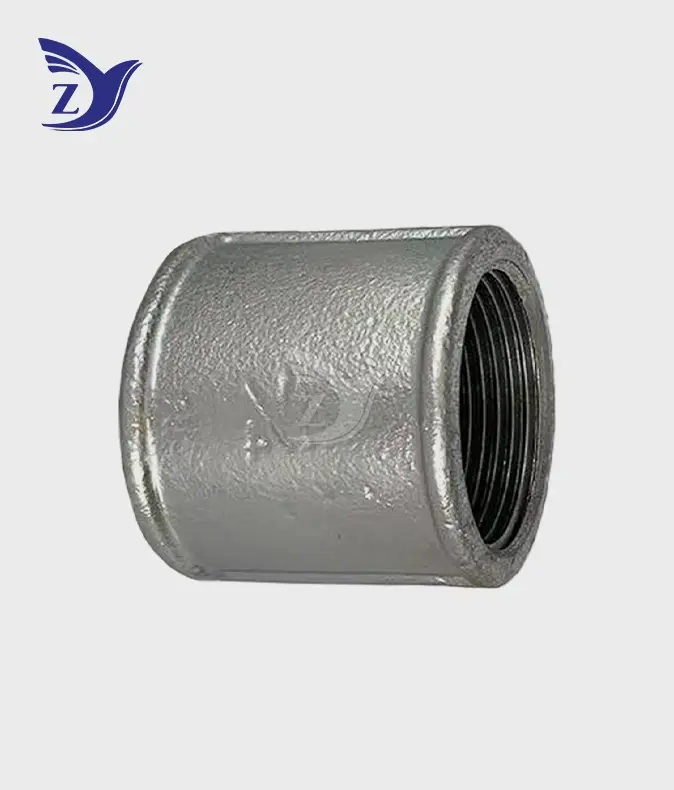
If you work in plumbing, gas pipeline installation, or industrial piping, you have probably asked this question at least once. An NPT coupling creates a permanent, pressure-sealed threaded joint between two pipe ends, while a union allows you to disconnect that joint without cutting the pipe. Knowing which one belongs on your job site can mean the difference between a smooth inspection and a costly rework. Products like NPT round face galvanized round edge coupling pipe fittings sit at the heart of this decision — built from high-strength malleable iron, hot-dip galvanized for corrosion resistance, and threaded to ASME B1.20.1 tolerances for a reliable, leak-free seal.
Understanding NPT Coupling and Union Fittings
What Is an NPT Coupling?
When you connect two male-threaded pipe ends together in a straight line, you have an NPT connection. As the joint gets tighter, the National Pipe Taper (NPT) thread standard calls for a 60° thread angle and a deliberate taper that makes a mechanical interference seal. A hot-dip zinc coating is added to a KTH350-10 malleable iron body to make NPT round-face galvanized, round-edge coupling pipe fittings. This makes a fitting that doesn't rust in wet, outdoor, or chemically active places. They are used a lot in water supply, gas distribution, and fire suppression lines. Their sizes range from 1/8" to 6".
What Is a Union Fitting?
There are three parts to a union: two threaded end pieces, a central nut, and the body itself. The three parts make it possible to break the connection without damaging the pipe next to it. Unions come in brass, stainless steel, and malleable iron, and they are most often used in places where maintenance or equipment swaps are going to happen in the future. In exchange, the unit cost is a little higher, and there is an extra possible leak point at the center nut seat.
Core Functional Differences at a Glance
The table below captures the practical contrast that matters most on a job site:
| Feature | NPT Coupling | Union |
|---|---|---|
| Connection type | Permanent | Detachable |
| Leak paths | One (thread) | Two (both threads + seat) |
| Maintenance access | Requires pipe cutting | Spin off the center nut |
| Typical cost | Lower | Higher |
| Best application | Fixed water/gas runs | Equipment connections |
Technical Comparison: NPT Coupling vs Union
Thread Specifications and Pressure Ratings
NPT connections meet the size requirements of ASME B16.3 Class 150 or Class 300. Because the threads are tapered, the joint is actually made tighter by internal pressure. This is why these fittings pass hydrostatic tests at 1.5 times the working pressure. At room temperature, a typical 1" Class 150 galvanized malleable iron NPT coupling can handle 300 psi of working pressure. Unions depend on a flat or ground seat between the two end pieces, so how well they seal depends on how well that seat surface holds up over many assembly cycles. This is a factor that becomes more important in places with a lot of shaking.
Material and Corrosion Resistance
When it comes to zinc coating thickness, hot-dip galvanized malleable iron fittings meet ASTM A153 standards, usually getting 43–86 µm of zinc per surface. This zinc layer protects the iron below, even when the coating gets small scratches, by acting as a sacrificial anode. In salt-spray settings, hot-dip galvanized iron parts last four to six times longer than ungalvanized ones, according to independent corrosion tests published in the Journal of Materials in Civil Engineering. On the other hand, black iron unions need extra paint or wrapping to be used outside. There is no chance of rusting with stainless unions, but they cost about 3–5 times more than NPT round face galvanized round edge coupling pipe fittings of the same size.
Round Edge vs. Square Edge Design
The round edge (beaded) profile at the mouth of a coupling adds mass to the opening, making the hoop stronger against wrench torque and sudden changes in internal pressure. Because of this, round edge valves are best for gas and steam lines that are under a lot of pressure and often have sudden pressure drops. Square edge connections are strong enough for low-pressure water lines in homes, but they don't have that strengthened shape.
Installation and Application Insights
It only takes a few minutes to correctly install NPT round face galvanized round edge coupling pipe fittings, but the order is important. After cleaning and smoothing out both ends of the pipe, you must use an industry-standard PTFE tape or pipe thread sealant compound on the male threads. This step is necessary because the helical thread path, even on a precision-tapped NPT fitting, needs a sealant to close the spiral leak path that is still open. Tighten by hand first to make sure the threads are engaged, then use a wrench to tighten 2–3 turns more than by hand. If you tighten the fitting too much, the body can crack, and if you tighten it too little, the joint is weaker than its rated pressure.
Each end piece of a union engages a thread in a similar way, but the center nut tightens against a flat or spherical seat instead of just thread interference. Unions are useful in boiler rooms, pump stations, and other places where a meter or valve needs to be taken off and put back on from time to time. But the round edge galvanized coupling works really well in fixed distribution networks, like city water mains, business gas branch lines, and industrial fire suppression headers, where staying in one place is a good thing.
Here are the scenarios where each fitting type delivers the greatest value:
- Fixed water or gas distribution lines: A precision-threaded galvanized round edge coupling provides a single, pressure-tested seal point with no moving parts. This lowers the risk of long-term leaks in dozens or hundreds of joints throughout a building.
- Equipment isolation points: A union at the gas meter or water heater connection lets a worker switch the unit in minutes without cutting the pipe. This saves money on labor costs for every repair call.
- Outdoor and corrosive environments: Hot-dip galvanized joints don't lose zinc as quickly in coastal or industrial settings, so they are the best choice for long-lasting, rust-proof above-ground runs that are exposed to the elements.
Matching the right fitting to each location in a system is the kind of decision that keeps inspection results clean and callbacks low.
Procurement Guide: Choosing the Right Fitting for Your Projects
As you figure out how much a business plumbing or gas pipeline job will cost, the fitting you choose has a bigger impact than the material itself. A permanent threaded coupling costs less up front and makes managing inventory easier, but specifying a union at every point that needs maintenance lowers the cost of labor later on. The best NPT round face galvanized round edge coupling pipe fittings for most fixed-run uses in the US market are those that are cost-effective, meet all safety standards, and last a long time.
Before you place a large order, you should make sure that the following things are true: thread gauge compliance (L1 ring gauge checked against ASME B1.20.1), hydrostatic pressure certification at 1.5× rated working pressure, ASTM A153 galvanization records, and ASME B16.3 dimensional limits. If a supplier gives you mill test reports and keeps their production quality systems ISO 9001 certified, you'll have proof that the project can be inspected and that you won't be held responsible.
On busy job sites, delivery lead time is just as important. Standard galvanized couplings from a maker with a lot of stock usually ship within 48 hours for common sizes. It may take 5–7 business days for custom reducing couplings or bigger widths. When a project manager locks in a seller that has 1/8" through 6" in stock, they don't have to coordinate with multiple vendors, which takes time.
Conclusion
It's easy to make a technical decision between an NPT connection and a union once you know how to maintain the system. When you use couplings, you get a stable, cost-effective, pressure-rated joint that works for most set water and gas delivery runs. Unions make it possible to reconnect where equipment service is expected. When it comes to either case, the thread accuracy, material strength, and corrosion resistance of the NPT round face galvanized round edge coupling pipe fittings are what determine whether your piping system will hold pressure on day one or day ten.
FAQ
1. What is the difference between round edge and square edge pipe couplings?
The round edge (beaded) form adds more material mass to the coupling mouth, making it stronger against wrench torque and pressure spikes inside the hoop. Square edge connections don't have this extra support, and they are usually used for low-pressure water lines in homes. The round edge shape is safer for NPT round face galvanized round edge coupling pipe fittings that handle pressurized gas or water for industry.
2. Are galvanized NPT couplings suitable for outdoor installation?
Yes, hot-dip galvanized malleable iron couplings meet ASTM A153 standards. They have a zinc coating that protects against oxidation in coastal, industrial, and outdoor settings. When used outside, they last a lot longer than black iron parts that haven't been galvanized.
3. Can NPT and BSPT threads be used interchangeably?
No, BSPT threads have a 55° thread angle, and NPT threads have a 60° thread angle. Putting them together damages the thread crests and causes leaks to happen. Make sure you know the thread standard before you order so that it fits with the pipes you already have.
4. Do NPT couplings need thread sealant?
Yes. Even if the NPT taper is perfectly polished, it still has a spiral leak path that needs to be sealed with PTFE tape or pipe dope. Sealant also keeps the joint from galling on galvanized surfaces by lubricating it as it is tightened.
Partner with Zhiyuan Malleable Steel for Certified NPT Fittings
Since 2006, Zhiyuan Malleable Steel has been making ISO 9001-certified malleable iron pipe fittings. They can make 30,000 tons of products each year, ranging from 1/8" to 6". Our catalog of NPT round face galvanized round edge coupling pipe fittings includes ratings for Class 150 and Class 300. These ratings have been confirmed by hydraulic tests and ASTM A153 galvanization records. It takes 48 hours to ship standard sizes. You can email our technical team at q1236800000@gmail.com right now to get a quote or some product samples.
References
1. American Society of Mechanical Engineers. ASME B16.3: Malleable Iron Threaded Fittings. ASME, 2021.
2. American Society of Mechanical Engineers. ASME B1.20.1: Pipe Threads, General Purpose (Inch). ASME, 2013.
3. ASTM International. ASTM A153/A153M: Standard Specification for Zinc Coating (Hot-Dip) on Iron and Steel Hardware. ASTM International, 2016.
4. Brockenbrough, R. L., and Merritt, F. S. Structural Steel Designer's Handbook. McGraw-Hill, 2011.
5. Nayyar, Mohinder L. Piping Handbook, 7th ed. McGraw-Hill, 2000.
6. Uhlig, H. H., and Revie, R. W. Corrosion and Corrosion Control: An Introduction to Corrosion Science and Engineering, 4th ed. Wiley, 2008.
Online Message