
Aug 12, 2026
How Are Galvanized Straight Tee Pipe Fittings Used in Piping Systems?
Galvanized straight tee pipe fittings serve as critical branching components that redirect flow in three equal directions within water, gas, and HVAC systems. Round face galvanized round edge straight tee pipe fittings feature reinforced beaded edges at their outlets, providing enhanced structural integrity during high-torque installation while the hot-dipped zinc coating delivers superior corrosion resistance. These malleable iron fittings accommodate NPT and BSPT threaded connections, allowing secure fluid distribution across fire suppression networks, municipal water lines, and industrial process pipelines where reliability directly impacts operational safety.
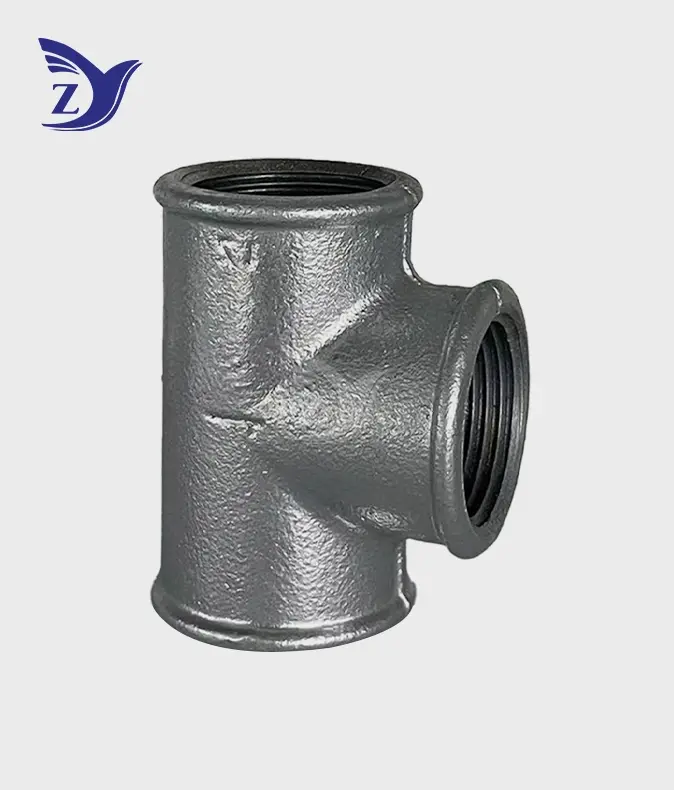
Practical Applications of Round Edge Straight Tee Pipe Fittings in Piping Systems
Industrial Water and Gas Distribution Networks
Galvanized tee fittings are used to branch service lines from main distribution pipes to each building in municipal water supply systems. The ability to resist corrosion is very important for underground installations, where soil moisture and electrolytic activity speed up the breakdown of materials. In natural gas distribution, these fittings are used for low- to medium-pressure situations where threaded connections make it easy to do repairs. The flexible iron material can handle small changes in the ground's level without breaking, unlike rigid cast iron options that might crack when the ground moves.
Fire Protection System Integration
When installing fire sprinklers, round face galvanized round edge straight tee pipe fittings need to be able to stay inactive for long amounts of time while still being ready to go at any time. Galvanized tee fittings connect wet pipe systems to individual spray heads. The zinc layer on the inside stops rust from building up, which could block the nozzles during an emergency. The round-edge design can handle the high installation pressure needed to make leak-proof seals in systems that are running at least 175 PSI. During regular checks, maintenance teams like the visual signs of corrosion—white rust shows that zinc is running out before the base metal is compromised, which lets them plan for replacements ahead of time.
HVAC and Heating System Applications
Using galvanized pipe networks branching off with tee fittings, hydronic heating systems move hot water through radiators in a building. The thermal stability of malleable iron helps these installations because it keeps its shape at temperatures up to 300°F and stops the galvanic corrosion that happens in many mixed-metal systems. The threaded ties let the modules grow as the energy needs of the building change. In industrial HVAC systems, these fittings are used in condensate draining lines to collect and send moisture away from air handling equipment. The galvanized protection stops acidic condensate from corroding steel within months. Recently completed projects in North American factories show how reliable precision-manufactured galvanized tee fittings are. For the clean-in-place (CIP) water distribution system in a 2022 food processing plant expansion in Wisconsin, zinc flexible fittings were chosen. The system has worked flawlessly for 18 months, enduring daily thermal shock cycles between room temperature and 180°F cleaning temperatures.
How to Select and Install Galvanized Straight Tee Pipe Fittings Effectively?
Procurement Criteria for Quality Assurance
When you specify zinc straight tee fittings, you need to make sure that they meet manufacturing standards. Product-specific certifications like UL and FM prove that a product is safe for use in fire protection systems, while ISO 9001 certification shows that quality management is done in a planned way. Pressure levels must match or go beyond what the system is supposed to handle. For example, Class 150 fittings can handle 150 PSI steam or 300 PSI cold water, which is enough for most business uses. Thread measuring reports that confirm "Go" or "No-Go" plug tests make sure that the dimensions are correct, which stops cross-threading during installation. Results from salt spray tests showing corrosion resistance for 500 hours or more confirm that the quality of the coating is higher than the minimum requirements set by ASTM A153. When evaluating a supplier, it's not enough to just compare prices; you should also look at their production capacity, store depth, and expert support. Manufacturers with an annual production capacity of 30,000 tons can meet the needs of large projects without having to wait for deliveries. Standard sizes that are immediately available from stocked inventory take away any risks to the project timeline, and the ability to make sizes that don't exist on the market meets non-standard engineering needs.
Installation Best Practices and Safety Protocols
Preparing the pipe ends for installation is the first step. Deburring the cut ends stops thread damage during assembly, and using pipe thread sealer or PTFE tape makes sure the joints don't leak. To keep the compound from getting into the flow path and contaminating systems or blocking valves, the sealer should only be put on the male threads and not on the first two threads. To tighten something, you need to use the right amount of torque. For sizes up to 2 inches, hand-tighten until the resistance rises, then use a wrench to add 1.5 to 2 turns. When bolts are over-tightened or threads are stripped, they crack. When torque is too low, leaks happen when pressure is cycling. For safety reasons, you should wear gloves that won't cut when working with sharp thread edges and make sure there is enough air flow when using pipe sealants that contain volatile solvents. Before putting a system into service, it is tested for 30 minutes at 1.5 times its operating pressure to find any weak spots. Visual leak detection with soap solution at all joints gives instant input while the pressure is being built up.
Maintenance Scheduling and Inspection Routines
Setting up preventive maintenance plans increases the life of round face galvanized round edge straight tee pipe fittings and stops catastrophic failures. Visual checks should be done once a year to record the state of the zinc coating and look for white rust growth or exposed base metal. Pipe clips and supports need to be checked to make sure they haven't caused stress points at nearby fittings. Ultrasonic monitoring equipment that finds microscopic seepage before it becomes noticeable dripping is used every six months to check for leaks in systems where pressure changes often. Documentation methods that keep track of installation dates, inspection results, and repair history make it possible to make replacement decisions based on data. If more than 40% of the exposed surfaces are covered in white rust, replacing them before an emergency happens during planned shutdowns. When there are yearly changes in temperature that cause links to expand and contract, reapplying thread compound during maintenance access can increase the life of the seal.
Procurement Insights: Buying Galvanized Round Edge Straight Tee Pipe Fittings
Identifying Reliable Manufacturers and Certifications
Genuine OEM goods have identification marks from the maker stamped or cast into the body of the fitting, such as production date codes that make them easy to track. Third-party certification marks from well-known testing labs back up performance promises. For example, UL listings show that the product is suitable for fire protection, and FM approval shows that it is compatible with sprinkler systems. For projects that depend on quality, you should ask for mill test results that include chemical composition analysis, mechanical property testing, and measures of coating thickness. Companies that have been in business since 2006 or earlier have been around for a long time, which suggests that their production processes are stable and that their customers are happy.
Bulk Purchasing Strategies and Price Optimization
For normal sizes, volume price tiers usually go into effect at 1,000 pieces or more, giving discounts of 15 to 25 percent compared to smaller orders. By combining the needs of several projects into a single buy order, you can save the most money and cut down on freight costs by shipping full trucks. Setting up blanket purchase agreements with planned releases lets you work with phased building schedules without giving up volume price. Forecasting yearly usage lets you negotiate fixed prices that protect you against rising material costs during the contract period.
Global Sourcing Platforms and Verification Methods
B2B marketplaces connect buyers and sellers of round face galvanized round-edge straight tee pipe fittings with each other. The sellers offer competitive prices on these fittings. When looking at sources, ask to see pictures of their production facilities with things like medium frequency electric furnaces and environmental galvanizing systems that show they can actually make things instead of just selling them. Tours of videoconferencing facilities are an extra way to check things without having to pay for expensive international travel. Payment terms that include inspection conditions, like paying 70% up front and then releasing the rest after a third-party checks the quality, protect buyers from receiving poor goods while keeping suppliers' cash flow steady for the start of production. The warranty should cover manufacturing flaws like porosity, thread faults, or early coating failure for 12 to 24 months after delivery. When defective products need to be taken out of the field and put back in, clear replacement procedures written down in purchase agreements stop arguments.
Conclusion
Because they are made of strong, malleable iron and zinc coats that don't rust, galvanized straight tee pipe fittings are reliable branching solutions for a wide range of piping uses. The round-edge design makes the installation last longer and keeps the cost down compared to more expensive options. The best performance is guaranteed by making a choice that matches thread standards, pressure ratings, and the factors in the surroundings. Following the torque specs and best practices for the sealant during installation keeps things from breaking too soon. Protocols for regular inspections extend service life by finding wear and tear before it compromises the system. Buying from certified manufacturers with proven production systems and capacity is the only way to be sure that a project will be successful.
FAQ
Can galvanized tee fittings be used in potable water systems?
For use with potable water, galvanized malleable iron tee fittings made from lead-free materials that meet NSF/ANSI 61 standards for drinking water system components are okay. The zinc covering has to meet potability standards, which are usually checked by third-party tests to make sure there is no harmful leaching. Many city water codes allow galvanized fittings to be used for installing service lines and building supply branches. Before specifying for drinking water contact, always check that the product meets local plumbing codes and ask the manufacturer for proof that it meets NSF standards.
What causes premature galvanized coating failure?
In a number of situations, coating breakdown speeds up. Water with a pH below 6.0 dissolves zinc, which is a chemical attack on zinc. Coatings wear off due to mechanical roughness when water speeds up to 10 feet per second. When you don't ground something properly, stray electrical currents form galvanic cells that quickly use up zinc. Continuous work at temperatures above 140°F speeds up the rate of rusting. Damage to the installation from pipe tools cutting surfaces shows the base metal. Testing the chemistry of the water and designing the system correctly keep most breakdowns from happening too soon, and careful placement keeps the coating's integrity.
How do I distinguish quality galvanized fittings from inferior products?
Some signs of quality are a matte gray zinc covering that doesn't have any black spots that show bare metal or too much zinc dross buildup inside the threads. Threaded connections should fit together easily, without binding or threads crossing over each other. Precision production with correct thread gauging is shown by fittings that are all the same size. Casting surfaces shouldn't have any holes, cracks, or cold shuts that can be seen up close. Markings from the manufacturer, such as size, standard compliance, and production numbers, show who is responsible. Ask for proof of certification, such as an ISO 9001 quality system registration, product testing records, and well-known third-party approvals like UL or FM lists that show the manufacturing is reliable.
Partner with Zhiyuan Malleable Steel for Reliable Pipe Fitting Solutions
Zhiyuan Malleable Steel has been making specialized steel products for 18 years and can help you with your plumbing projects. They can make over 1,000 types of round face galvanized round edge straight tee pipe fittings every year and can handle 30,000 tons of them. Our factory in Shanxi Province is ISO 9001-certified and has eight 3-ton medium frequency ovens and specialized galvanizing systems that make sure the quality of every batch is the same. Our goods meet foreign standards for fire safety and plumbing because they have CE, UL, and FM certifications. Items in our standard inventory are shipped within two hours, and our ODM/OEM services can meet the specific needs of a wide range of applications. As an experienced manufacturer of round-face galvanized round-edge straight tee pipe fittings, we offer guarantees for defective products and full technical support throughout the entire buying process. You can email our team at q1236800000@gmail.com or visit zymalleablepipefitting.com to talk about your project needs and get full product specs and low bulk prices for your next installation.
References
American Society for Testing and Materials. (2019). ASTM A197 Standard Specification for Cupola Malleable Iron. West Conshohocken, PA: ASTM International.
British Standards Institution. (2018). BS EN 10242 Threaded Pipe Fittings in Malleable Cast Iron. London: BSI Standards Publication.
National Fire Protection Association. (2022). NFPA 13 Standard for the Installation of Sprinkler Systems. Quincy, MA: NFPA Publications.
Porter, Frank C. (2016). Corrosion Resistance of Zinc and Zinc Alloys. Boca Raton, FL: CRC Press.
Smith, William F. & Hashemi, Javad. (2020). Foundations of Materials Science and Engineering (7th ed.). New York: McGraw-Hill Education.
Woodson, R. Dodge. (2017). Plumber's and Pipe Fitter's Calculations Manual (2nd ed.). New York: McGraw-Hill Professional.
Online Message