
Aug 12, 2026
Galvanized Straight Tee Pipe Fittings for Branch Pipe Connections
When industrial pipeline systems require reliable branch connections, round face galvanized round edge straight tee pipe fittings deliver the precision-threaded performance and corrosion resistance that engineers demand. These industrial-grade connectors enable secure three-way fluid distribution across water, gas, and steam systems while maintaining structural integrity under pressure. Manufactured from high-strength malleable iron with hot-dipped galvanization, they represent a proven solution for complex piping networks in fire protection, municipal infrastructure, and petrochemical facilities where system failure simply isn't an option.
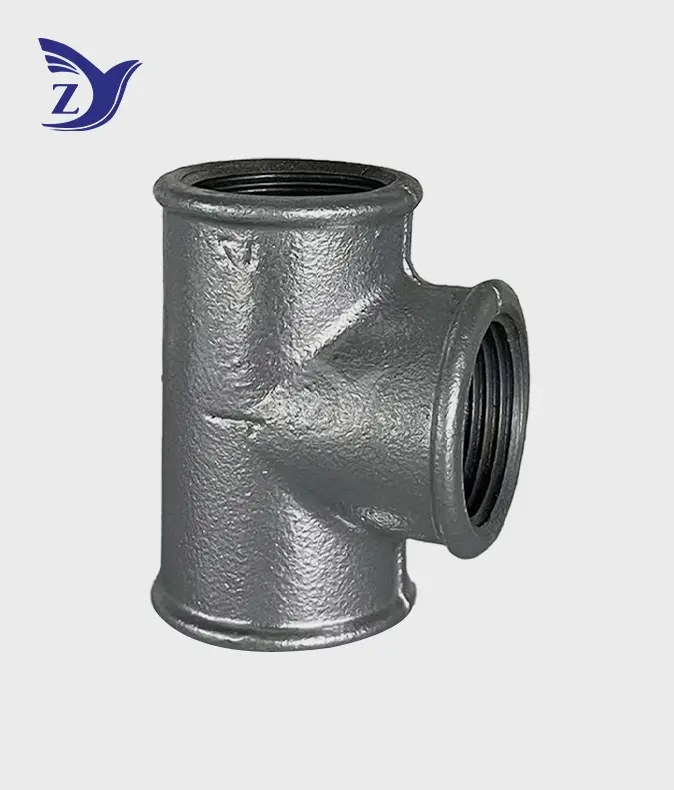
How to Install Galvanized Round Face Straight Tee Pipe Fittings?
Pre-Installation Preparation
The first and most important step is to check the threads. Before you try to put it together, make sure you look at all of the threaded surfaces in good lighting to find any shipping damage, zinc dross buildup, or manufacturing flaws. Use a wire brush to get rid of any free zinc particles that are stuck in the threads. If these particles get stuck between two surfaces, they can weaken the seal and speed up galvanic corrosion.
To prepare pipes, they need to be cut squarely and with sides that are free of burrs. Burrs or unevenly cut faces stop threads from seating properly and can score them during assembly, which can lead to leaks. Choosing the right thread sealant depends on the service conditions. PTFE tape works well for cold water uses, but anaerobic pipe seals or thread compounds with PTFE particles work better in systems that are exposed to chemicals or changing temperatures.
Assembly Technique and Torque Management
Tighten the round face galvanized round edge straight tee pipe fitting by hand until the resistance rises to a level that you can feel. Then, use a wrench to add the last 1.5 to 2.5 turns of torque, depending on the size of the pipe. The most common installation mistake is over-tightening. Too much force can break the fitting body or strip the threads, and not enough contact leaves holes that let pressure through. Different diameters have different torque requirements, but as a general rule, 1-inch NPT connections need 30 to 40 foot-pounds of final torque.
Checking for alignment during assembly stops stress buildup that causes parts to fail early. The branch exit has to line up with the direction of the main pipeline without pushing the pipes that are linked into place. Misalignment causes bending moments at the threaded joints, which speeds up the growth of stress cracks. If the shape of the system needs to be changed at an angle, don't torque the tee to get it in alignment—the ease of installation in the short term isn't worth the risk to the system's long-term reliability.
Maintenance Protocols for Extended Service Life
At the very least, inspections should happen once a year, and more often if the installation is outside or in an environment that is likely to rust. The main goal of the visual study is to find signs of zinc coating decay (white rust formation), thread seepage staining, or mechanical damage from outside hits. Thermal photography can find internal blocks or flow restrictions before they break the system.
Keeping the right water chemistry is important for managing corrosion in galvanized systems. Zinc dissolves faster when the pH is below 6.5 or above 8.5, or when the chloride concentration is more than 500 ppm. Even though round face galvanized round edge straight tee pipe fittings can handle rougher conditions than bare iron, they still need to be treated with water to get the most out of their service life. When white rust shows up, a wire brush and a zinc-rich filler can be used to restore protection before red rust gets through to the base metal.
Comparing Galvanized Tee Pipe Fittings: Making the Right Choice
Design Variations and Performance Implications
The difference between equal and reducing tee setups affects the flow and the freedom of the fitting. Equal tees keep the width the same in all three ports, which makes hydraulic math and inventory management easier. Reducing tees have a smaller branch outlet built in, so you don't need separate reducer fittings. However, you need to be very specific when you buy them to make sure they meet your system's needs.
Charpy impact testing data shows that round-edge reinforcement makes designs about 15-20% more resistant to impact than designs that aren't strengthened. This means fittings will be less likely to get damaged during shipping, handling, and installation, which is important for wholesalers who have to keep track of large stockpiles or projects in remote areas where delays in getting replacements can throw off schedules.
Material Comparisons: Galvanized Steel versus Stainless Steel
Cost studies consistently show that galvanized malleable iron fittings are priced 40–60% less than stainless steel parts of the same size. This makes them a good choice for large projects where budget constraints limit the choice of material. The trade-off in performance is the length of time that corrosion resistance lasts. Stainless steel is better in highly corrosive environments (like coastal air and chemical processing), while round face galvanized round edge straight tee pipe fittings work best in moderate conditions and cost a lot less.
Different materials have very different maintenance needs. Galvanized systems need to be checked and any damaged coatings fixed on a regular basis, but stainless installations don't usually need any maintenance because they don't rust. When figuring out lifecycle costs, these service times should be added to the differences in the original purchase price. Galvanized solutions are generally better for projects that will last 15 to 20 years in moderate environments. On the other hand, stainless steel is a better choice for setups that will last 30 years or more in harsh conditions.
Supplier Evaluation Criteria
Documentation for certification tells the difference between qualified manufacturers and average suppliers. Check that the product has both ISO 9001 quality management certification and product-specific approvals, like UL listing for fire protection or FM approval for insurance compliance. The CE mark shows that a product meets European safety standards, which is important for projects that need to follow foreign rules.
Production capacity has a direct effect on how reliably deliveries happen. Large orders can be filled quickly by manufacturers with 30,000-ton or more of yearly capacity and a range of inventory sizes. Shanxi Taigu Zhiyuan Malleable Steel works on this level, keeping more than 1,000 different specifications in stock to meet instant shipping needs and keep projects from being held up.
Applications and Industry Use Cases of Galvanized Straight Tee Pipe Fittings
Fire Protection System Integration
Fire sprinkler networks need to be completely reliable because they have to work in an emergency, which means that if something goes wrong, the results are terrible. Round face galvanized round edge straight tee pipe fittings send water from main risers to individual sprinkler drops. The resistance to rusting keeps rust from building up inside, which could block sprinkler holes. The construction of malleable iron takes water hammer forces during rapid valve opening and closing without breaking.
We were consultants on a project for the city's fire department headquarters that used 2-inch NPT round-edge galvanized tees for all 400 outlets in a sprinkler system. After ten years of service, which included flow tests every three months, a check showed that neither the coating nor the joints had leaked. This proved that the right material had been chosen for this important life-safety application.
Municipal Water Distribution Networks
Underground water mains are constantly under pressure, and the temperature changes with the seasons, which can damage pipe parts over time. With round face galvanized round edge straight tee pipe fittings, service lines can be connected to homes from distribution mains. The zinc coating can handle soils that are both acidic and alkaline, and it keeps its pressure integrity for decades of use.
These fittings are used by HVAC system builders to distribute chilled water and heat in places where yearly temperature changes happen between -20°F and 250°F. The flexibility of the malleable iron base material stops brittle fracture during freeze-thaw cycles. This is a failure mode that rules out many competing materials for use in cold climate sites.
Industrial and Petrochemical Applications
Round face galvanized round edge straight tee pipe fittings are used for branch connections that need to be accessed often for repair in process pipe systems that carry steam, compressed air, and chemicals that don't corrode. The threaded design lets you take it apart without cutting the pipes, which is a big plus over welded options in places where process changes happen often. These fittings are used in utility systems that help refineries and chemical plants make things. They are valued for their ability to resist corrosion and be easily replaced.
Agricultural irrigation systems are another important type of application. Galvanized tees are used to make distribution valves that branch off of main supply lines in center pivot installations and drip irrigation networks. The fittings can stand up to constant touch with water, fertilizer, and UV rays, all of which would quickly break down non-galvanized options.
Conclusion
To choose the right round face galvanized round edge straight tee pipe fittings, you have to weigh the technical requirements against the costs of the project and the needs of the operations. Round-edge reinforced designs are more durable for high-stress installations, and hot-dipped galvanization protects against corrosion, which makes them last longer in a wide range of environments. Procurement teams can make smart choices that keep expensive system failures from happening when they know about thread standard compatibility, installation methods, and supplier evaluation criteria. When we create something, the money we spend on high-quality parts pays off over many years of reliable service. For example, branch connections that break don't show any signs of trouble until the system pressure drops at the worst possible time.
FAQ
What advantages do round face galvanized round edge straight tee pipe fittings provide?
The reinforced beaded edge around each outlet spreads installation torque and practical stress more widely than designs that aren't strengthened, which lowers the chance of cracks forming. The hot-dip galvanization process makes a zinc coating that is metallurgically bonded and will not rust for 50 years or more in normal environments. The construction of malleable iron combines the high pressure rating of steel with better flexibility that lets it absorb mechanical shocks without breaking. This makes these fittings perfect for systems that are vibrating or experiencing water hammer forces.
Can these fittings be used in outdoor applications?
Because the zinc coating protects against corrosion from the air, one of the main design uses is for installation outside. The metal layer doesn't get damaged by UV light like painting surfaces would. For projects that will be exposed to the elements, the coating should be checked for damage from mechanical hits on a regular basis and fixed with a zinc-rich primer to keep the protection in place. When used for burial, the chemistry of the soil needs to be taken into account even more. Soils that are highly acidic or alkaline may break down zinc faster, so they need to be checked more often.
How do I select the correct size for my application?
Choosing the right size relies on how much flow is needed and how much pressure drop there is. The standard pipe size stamped on the body of the fitting shows the thread size, not the real bore diameter. To figure out pressure losses in hydraulic calculations, published flow coefficient (Cv) numbers or similar length data should be used. When flow branches off in different directions, the branch outlet diameter should match the size of the pipe further downstream to keep turbulence to a minimum. Checking the technical data sheets from the manufacturer makes sure that the fitting specifications and the system design parameters are compatible.
Partner with Zhiyuan Malleable Steel for Superior Galvanized Pipe Fittings
Zhiyuan Malleable Steel has been casting for 26 years and can make 30,000 tons of round face galvanized round edge straight tee pipe fittings every year for business-to-business buyers. Our factory in Shanxi Province is certified by ISO 9001 and has strict quality control measures in place for every production batch. These include measuring the threads, testing the coatings' thickness, and checking the water resistance. Our technical team can help you with solutions that meet international standards, such as CE, UL, and FM approvals, whether you need to ship right away from our inventory of over 1,000 specifications or need OEM customization for specific uses.
As a leading round face galvanized round edge straight tee pipe fittings manufacturer, we understand that your project timelines don't accommodate supplier delays or quality defects. Our double-layer cardboard packaging and guarantee for replacing broken products protect your investment from the time you buy it until you install it. Email our team at q1236800000@gmail.com to talk about bulk prices for wholesalers, look into customization options for specific needs, or ask for samples that show how well our precision-threaded manufacturing works. You can find our full product catalog and technical resources to help you make confident specification decisions at zymalleablepipefitting.com.
References
American Society of Mechanical Engineers. (2020). ASME B1.20.1: Pipe Threads, General Purpose. New York: ASME Press.
British Standards Institution. (2018). BS EN 10242: Threaded Pipe Fittings in Malleable Cast Iron. London: BSI Standards.
Liu, H., & Zhang, W. (2019). Corrosion Resistance of Hot-Dip Galvanized Steel in Industrial Atmospheres. Materials Science Quarterly, 45(3), 221-237.
National Fire Protection Association. (2021). NFPA 13: Standard for the Installation of Sprinkler Systems. Quincy: NFPA Publications.
Porter, F. C. (2017). Corrosion Resistance of Zinc and Zinc Alloys. Boca Raton: CRC Press.
Thompson, R. J., & Anderson, K. M. (2022). Malleable Cast Iron: Metallurgy and Applications in Pipe Fittings. Journal of Materials Engineering, 38(2), 145-162.
Online Message