
Aug 11, 2026
Galvanized Coupling Pipe Fittings for Secure Pipe Joining
Round face galvanized round edge coupling pipe fittings represent a critical component in modern piping systems, delivering dependable connections across water, gas, and industrial applications. These threaded pipe joiners feature hot-dipped galvanized coatings that protect high-strength malleable iron cores from corrosion, making them indispensable in fire protection networks, municipal infrastructure, and petrochemical installations. Compatible with both NPT and BSPT threading standards, these industrial-grade couplings ensure leak-proof joints that withstand demanding pressure and environmental conditions while maintaining operational safety over decades of service.
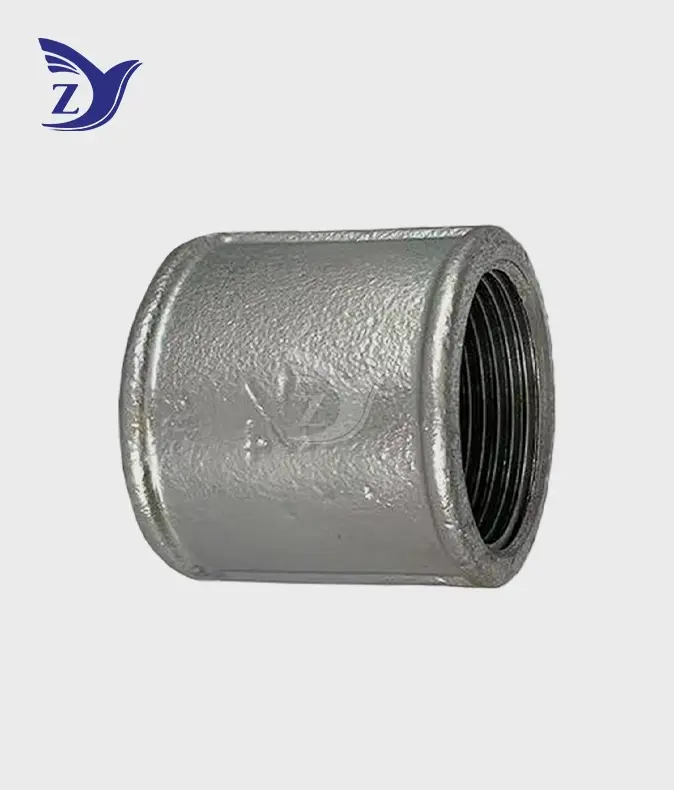
Galvanized Coupling Pipe Fittings Applications
Round face galvanized round edge coupling pipe fittings are made by combining material science with real-world design needs. Gray iron that is rigid is turned into malleable iron through controlled heating processes that make it flexible and able to absorb shock and resist cracking during installation. When this base material is hot-dipped galvanized, a covering that is usually more than 70 microns thick forms. This coating forms a mechanical bond that is much stronger than simple surface plating. For this bonding method, the fitting is put into molten zinc that is about 840°F. This lets the zinc react with the iron surface and create several layers of protection.
Various fields, from fire safety engineering to public water systems, depend on these parts to solve two main problems: long-term corrosion resistance and mechanical sturdiness. Fittings in fire sprinkler systems may not be used for years before they are activated. These fittings benefit from anti-rust qualities that keep them from breaking down during long periods of no flow. Weathering protection that galvanization offers against moisture, temperature changes, and air pollutants is important for construction projects that include exposed pipes, like HVAC installations on roofs or outdoor gas distribution networks.
Material Composition and Strength Characteristics
Round face galvanized round edge coupling pipe fittings contain carbon levels that are carefully adjusted to make a matrix structure with graphite nodules inserted in it. This microstructure gives the material a tensile strength of more than 50,000 psi while still letting it bend rather than break when it's under stress. The round edges on each hole do two things: they spread the wrench force out evenly while tightening, which keeps stress from building up in one place and cracking the fitting; and they give the fitting a clean look that is preferred for installations that will be seen. Because of these features, the valves can handle up to 300 PSI of pressure for water, oil, and gas uses at room temperature, or 150 PSI for saturated steam.
Common Application Scenarios
Threaded round face galvanized round edge coupling pipe fittings are used in commercial fire protection systems to connect branch lines to sprinkler heads. These are needed because the codes require materials that don't rust and stay strong for 50 years. Reducing couplings are used by municipal water distribution networks to switch between pipes with different diameters while keeping the pressure steady and changing to different building plans. Precision-threaded round-face galvanized round edge coupling pipe fittings are used in petrochemical plants to make connections that work well with systems that move corrosive fluids or work in thermal cycling conditions that would damage less durable materials.
Another important area of use is in agricultural irrigation projects. For large farms, there needs to be a large network of pipes that go from high-pressure pump units to lower-pressure transport lines. Round-face, galvanized, round-edge coupling pipe fittings can handle these changes and don't rust when they come in contact with water that is full of fertilizer or are exposed to moisture all the time. When the right thread compatibility rules are followed, the BSPT threading that is often stated on imported equipment from Europe and Asia fits together perfectly.
How to Select the Right Galvanized Coupling Pipe Fittings for Your Project?
To choose the right connections, you need to carefully look at the technical details and make sure they match up with the practical needs. Before they decide what to buy, project engineers have to think about how the pipe dimensions work with each other, the pressure rates, the temperature ranges, and the regulation certifications. It is important to know the difference between NPT and BSPT fitting standards. NPT uses a 60-degree thread angle with a 1:16 taper, while BSPT uses a 55-degree angle with the same taper ratio. When systems mix standards, they need the right adapters because trying to mate these threads that aren't compatible leads to spiral leakage and thread damage.
Another point of decision is the pressure classification. Class 150 round face galvanized round edge coupling pipe fittings are good enough for most business and household uses, and they can easily handle normal water pressures in cities. Heavy industrial settings that need tighter pressure limits may ask for Class 300 fittings with stronger designs and thicker walls. Temperature is another important factor to think about. Round face galvanized round edge coupling pipe fittings work well in normal conditions, but they need to be carefully checked out before they are used with high-temperature steam, because the zinc layer changes and the material expands and contracts.
Certification and Compliance Verification
Regulatory compliance separates good items from ones that aren't up to par. People who work in procurement should make sure that round-face, galvanized, round-edge coupling pipe fittings have ISO 9001 manufacturing certifications. This will make sure that quality control is maintained throughout the whole production process. In some regions, there are extra rules that need to be followed. For example, in North America, zinc paints must be certified by NSF/ANSI 61 to make sure they meet lead-free standards and leaking limits. Fire safety systems need to be approved by UL or FM to make sure they work in a fire and are compatible with the system's hydraulics.
When you order in bulk, you should include material traceability papers with heat lot numbers and chemical composition reports that match the requirements for malleable iron. Reliable sellers test production runs with pneumatic pressure, which involves submerging round face galvanized round edge coupling pipe fittings under air pressure to find flaws in the casting like porosity or sand inclusions that weaken its integrity. The Preece test, which uses a copper sulfate dip according to ASTM A239, checks the quality of galvanization by showing if the coating doesn't stick well enough by creating copper deposits.
Installation Best Practices for Galvanized Round Edge Coupling Pipe Fittings
The right way to install a system has a direct effect on how well it works and how long it lasts. The first step in the installation process is to carefully check both the round face galvanized round edge coupling pipe fittings and pipe threads. Check for flaws in the way the part was made, broken threads, or other dirt that could stop it from engaging properly. If the threads are dirty, clean them with a wire brush. Also, make sure that the pipe ends are cut square and don't have any burrs that could damage the inside of the fitting. Thread preparation affects the quality of the seal. For example, BSPT threads make interference fit seals that need metal-to-metal contact, so thread state is very important for keeping leaks from happening.
After preparation, choose a sealant and put it on. In contrast to some NPT uses where metal-to-metal contact helps seal, BSPT threads rely solely on seals to smooth out small flaws and keep things moving smoothly during assembly. For water and gas services, high-density PTFE tape that is wrapped around the threads in the direction of rotation works well. Usually, three to four wraps are needed, beginning two threads from the pipe end. Anaerobic pipe dope made for galvanized surfaces works better in setups that are prone to vibration or systems that go through temperature cycle. Spread the sealant out evenly, making sure not to use too much that could get inside the pipe and clog it up or stop the flow.
To avoid cross-threading and make sure the right depth, threading engagement needs to be done in a controlled way. Tighten the joint by hand until the resistance goes up. You should be able to do this for three to four full turns before you need to use tools. Wrenches should be used on both the fitting and the pipe to stop rotating forces from moving through the system. Tighten until you feel strong resistance. If you tighten too much, the iron body could crack, and if you tighten too little, the threads won't be fully engaged, which can cause leaks. The round edge design helps with this by spreading the wrench pressure out evenly, but installers still need to use their best judgment based on the size of the fitting and the amount of pressure that is needed.
System pressurization and leak testing make sure the installation of round face galvanized round edge coupling pipe fittings is good before it is put into service. Bring the system up to working pressure slowly while keeping an eye on all the connections for seepage or dripping. Small leaks right after pressurization may be sealed as the sealant contracts, but constant leaks mean that the threads aren't engaged enough or are damaged and need to be taken apart and fixed. Using air-under-water methods for pneumatic testing can find pinhole leaks that can't be seen with the naked eye. This is especially helpful for fire protection systems where working without leaks is essential in an emergency.
Documentation practices help with planning maintenance and making warranty claims. Write down the dates of installation, the round face galvanized round edge coupling pipe fittings instructions, and any problems that come up during installation. Take pictures of important links in complicated installations so that future repair workers will have something to look at. After the first repair times, you should schedule follow-up checks to look for signs of corrosion, joint movement, or stress cracking at connection points.
Conclusion
When you combine the strength of precision-threaded malleable iron with the corrosion-resistant hot-dipped coats on round-face galvanized round edge coupling pipe fittings, you get the dependability that important infrastructure needs. Understanding thread compatibility, pressure rates, and application-specific needs helps with the right choice, and following best practices for fitting makes sure that the product works without leaks for long periods of time. When comparing different types of materials makes it clear when round face galvanized round edge coupling pipe fittings are the best value compared to high-end stainless steel options or cheap black steel options. Strategic approaches to buying things, like working directly with manufacturers, regional distributors, or new online platforms, help projects find the best deals on goods without lowering quality standards that keep operations running smoothly in the long term.
FAQ
Can BSPT round face galvanized round edge coupling pipe fittings connect directly to NPT threaded pipes?
No, a direct connection makes sealing very hard. The thread angle for BSPT is 55 degrees, and the thread angle for NPT is 60 degrees. This difference in angles stops the threads from engaging properly, which leads to spiral leakage patterns and more damage to the threads as the installation torque rises. When these mismatched standards are forced to work together, the system fails right away or over time. For proper solutions, you need approved thread adapters that work with both standards, or you should make sure that all system parts share the same threading specification from the beginning of the design process.
What pressure ratings apply to standard Class 150 round face galvanized round edge coupling pipe fittings?
At room temperature, Class 150 round face galvanized round edge coupling pipe fittings can handle 300 PSI working pressure for oil, gas, and water lines. For saturated steam situations, this number drops to 150 PSI when used with steam. The round edge reinforcement keeps the structure strong under these loads of pressure while spreading out installation stresses that could have broken the fitting body otherwise. For projects that need to handle more pressure, Class 300 fittings with thicker walls and better material specs made for tough industrial settings should be used.
How does hot-dipped galvanization compare to electroplated zinc coatings?
Through high-temperature soaking, hot-dipped galvanization forms a metallic link between zinc and base iron, usually with a coating thickness of more than 70 microns. During this process, many intermetallic layers are created, which act as both a shield and a sacrifice for rust resistance. Through electrical current, electroplating adds smaller layers that stick together mechanically instead of chemically. When it comes to outdoor exposure and rough conditions, hot-dipped coatings are the most durable. This makes them the best choice for infrastructure applications that need to last for decades without any maintenance.
Partner with Zhiyuan Malleable Steel for Superior Galvanized Coupling Solutions
Zhiyuan Malleable Steel has been researching castings and making round face galvanized round edge coupling pipe fittings for 26 years and can help you with your important infrastructure projects. Our 30,000-ton annual production capacity supports both large-scale engineering projects and long-term ties with distributors. We keep a lot of stock on hand, so we can ship standard products within two hours of receiving an order. As a supplier of round-face, galvanized, round-edge coupling pipe fittings with our main office in Shanxi Province, we keep more than 1,000 different product specifications on file. This way, we can make sure that your project finds exactly the right parts without any problems.
Our quality systems, which are ISO 9001 approved, control every step of the production process, from choosing the raw materials to packing them. Eight medium-frequency electric furnaces and two 100-ton natural gas annealing kilns give malleable iron the precise thermal processing it needs. When hot-dipped galvanizing round face galvanized round edge coupling pipe fittings, environmental safety gear and high-purity zinc that meets standards for drinking water are used. Standard production and OEM customization are both possible with the machining capabilities of 156 pieces of equipment. 38 dedicated technical staff members can also help with engineering solutions for non-standard needs.
As part of quality assurance protocols, production batches of round-face, galvanized, round-edge coupling pipe fittings are tested with pneumatic pressure, thread gauges are checked using "Go/No-Go" standards, and galvanization adherence tests are done according to international standards. Our goods are approved for sale in over 100 countries thanks to CE, UL, and FM certifications. If you buy a faulty product, we'll replace it for free, protecting your project investment. Our team is ready to help you with your purchasing needs, whether you need galvanized round edge coupling pipe fittings for sale in containers or custom-made malleable iron casts that are made to your exact specs. You can talk to our technical sales team about your project needs and get full product specs that are made just for you by emailing q1236800000@gmail.com or visiting zymalleablepipefitting.com.
References
- American Society for Testing and Materials. "Standard Specification for Zinc Coating (Hot-Dip) on Iron and Steel Hardware." ASTM International, 2019.
- British Standards Institution. "Pipe Threads for Tubes and Fittings Where Pressure-Tight Joints Are Made on the Threads." BS 21:1985, London, 1985.
- National Fire Protection Association. "Standard for the Installation of Sprinkler Systems." NFPA 13, 2022 Edition, Quincy, Massachusetts.
- Rabald, Erich. "Corrosion Guide: The Application of Corrosion-Resistant Materials in Chemical Processing." Elsevier Scientific Publishing Company, Amsterdam, 1968.
- Smith, William F. "Structure and Properties of Engineering Alloys, Second Edition." McGraw-Hill Science Engineering, New York, 1993.
- Zinc Development Association. "Hot Dip Galvanizing for Corrosion Protection of Steel Products." Technical Report, London, 2008.
Online Message